Per Christensen

Per Christensen

Helping leadership teams turn shared priorities into real results. Consultant, executive and board member, and author of the Strategy Alignment books.

Books

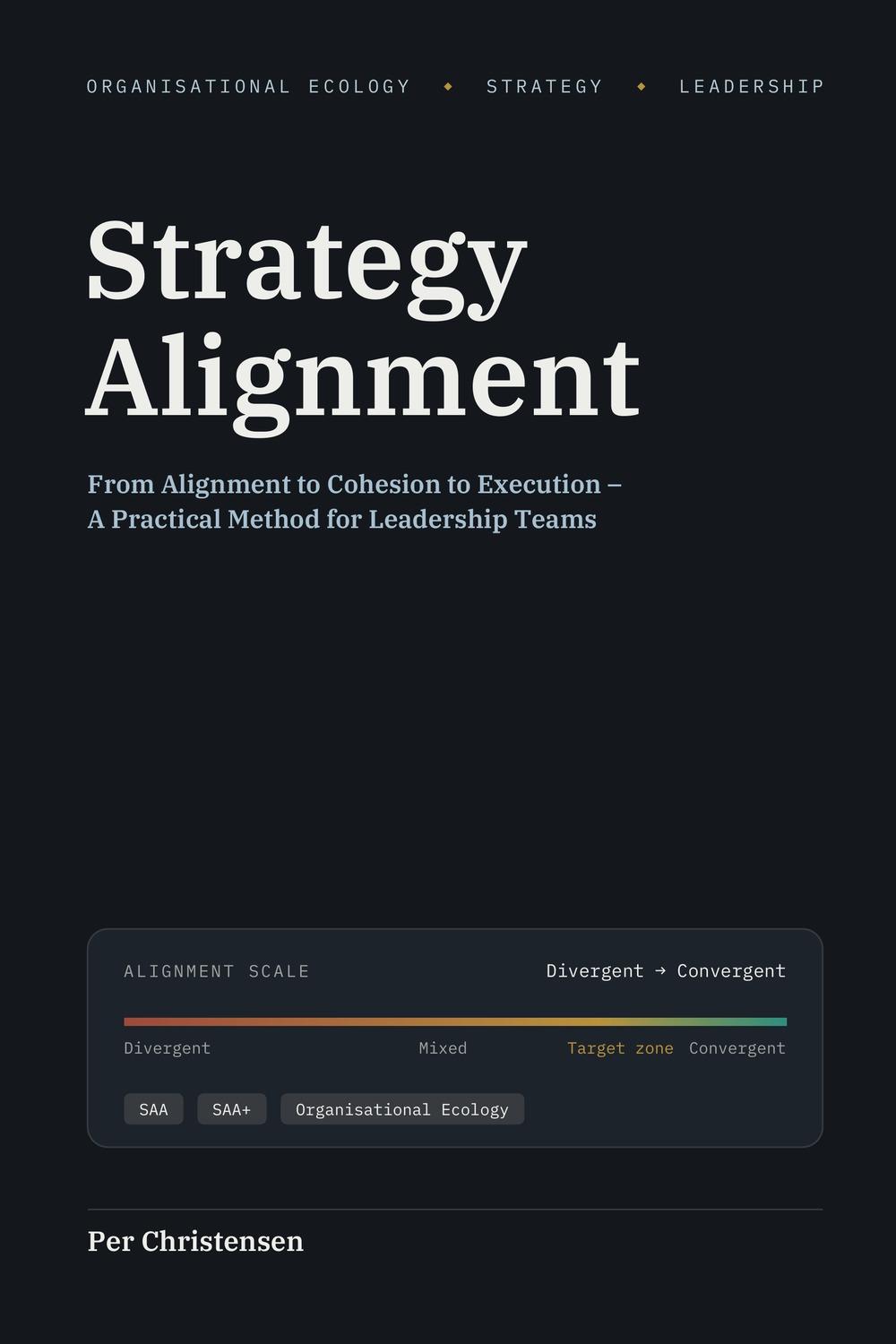
Cover of Strategy Alignment

Strategy Alignment

From Alignment to Cohesion to Execution - A Practical Method for Leadership Teams

Does your leadership team really agree on what matters most?

Most leadership teams believe they share priorities. Few have ever checked. Ask each member to rank the organisation's goals and the finance director puts the financial goal first, the sales director the market, the head of HR competence and working environment. Each is surprised the others have done the same.

Nothing is wrong with any of those rankings. Trouble starts when a team does not know they differ. Decisions stall, action plans weaken, and the strategy exists on paper but not in practice.

Strategy Alignment shows how to close that gap. Per Christensen brings together two strands of work:

  • Organisational Ecology is a practical theory of organisational change, developed since 1988. It explains why well-intentioned people who all want the organisation to succeed so often pull in different directions.

  • Strategy Alignment Analysis™ (SAA) is a structured method that measures how aligned a leadership or project team is on its strategic focus areas, then helps the team turn that picture into cohesion and execution.

The theory gives the measurement its meaning, and the method puts the theory to work.

You will learn:

  • Why organisations are better understood as ecosystems than as machines, and why short-term fixes so often produce long-term side effects

  • The nine organisational-ecological principles for change

  • How positions, perception and language shape what people agree on, and what they only seem to agree on

  • Why resistance to change is feedback, not opposition

  • The difference between alignment, which can be measured, and cohesion, which must be built

  • How the eight steps of an SAA work, from choosing the focus areas to the workshop where the team works through its results

  • How the SAA+ framework links vision, strategic focus areas, goals and action plans, and how to follow them through

  • Where measurement reaches its limits, and the ethics and confidentiality responsible use demands

What makes this book different

It does not offer a quick fix. It argues that differences in priorities are natural and, up to a point, valuable, and that a team which can see its own alignment clearly is better placed to strengthen it. Because the differences are quantified, the conversation stays factual rather than personal. SAA measures how closely a team's priorities align, never the quality or performance of an individual.

The book includes a worked case of nine leaders and five focus areas, plus anonymised examples from real consulting work. The algorithm behind the Alignment Index is proprietary and not described. The book explains what the measurement captures, how to read the results and act on them.

Who it is for

  • Leaders and board members who are responsible for a strategy and want it to become more than a document

  • Consultants, organisational developers and advisers who help leadership teams with strategy and change

  • Students of strategy, leadership and organisational development


Sixteen chapters in five parts move from the problem, through the theory, to practice and execution. Each chapter ends with reflection questions, and the book closes with notes, a glossary and a bibliography.

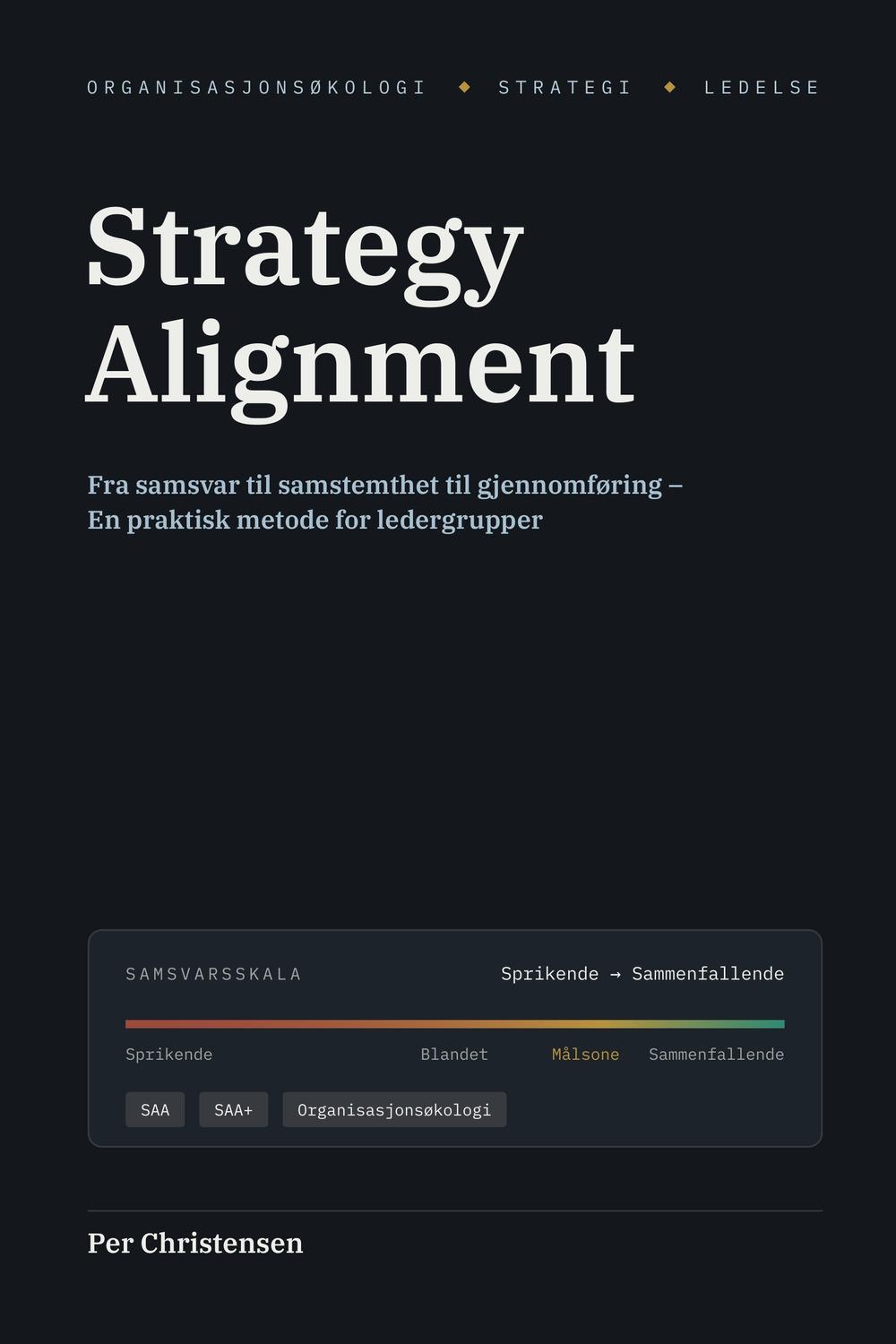
Cover of Strategy Alignment (Norwegian Edition)

Strategy Alignment (Norwegian Edition)

Fra samsvar til samstemthet til gjennomføring - En praktisk metode for ledergrupper

Er ledergruppen deres virkelig enige om hva som betyr mest?

De fleste ledergrupper tror de deler samme prioriteringer. Få har noen gang sjekket det. Be hvert medlem rangere organisasjonens mål, og økonomidirektøren setter det økonomiske målet først, salgsdirektøren markedet og personaldirektøren kompetanse og arbeidsmiljø. Hver av dem overraskes over at de andre har gjort det samme.

Ingen av rangeringene er feil. Problemene oppstår når teamet ikke vet at de er forskjellige. Beslutninger stopper opp, handlingsplanene blir svake, og strategien finnes på papiret, men ikke i praksis.

Strategy Alignment viser hvordan dette gapet kan lukkes. Per Christensen forener to arbeidsområder:

  • Organisasjonsøkologi er en praktisk teori om organisasjonsendring, utviklet siden 1988. Den forklarer hvorfor velmenende mennesker, som alle ønsker at organisasjonen skal lykkes, så ofte trekker i ulike retninger.

  • Strategy Alignment Analysis™ (SAA) er en strukturert metode som måler hvor samkjørt en ledergruppe eller et prosjektteam er om sine strategiske fokusområder, og som hjelper teamet å omsette bildet til samstemthet og gjennomføring.

Teorien gir målingen mening, og metoden setter den ut i livet.

Du vil lære:

  • Hvorfor organisasjoner forstås bedre som økosystemer enn som maskiner, og hvorfor kortsiktige løsninger så ofte gir langsiktige bivirkninger

  • De ni organisasjonsøkologiske prinsippene for endring

  • Hvordan posisjoner, persepsjon og språk former det folk er enige om, og det de bare tilsynelatende er enige om

  • Hvorfor motstand mot endring er tilbakemelding, ikke opposisjon

  • Forskjellen mellom samsvar, som kan måles, og samstemthet, som må bygges

  • Hvordan de åtte trinnene i en SAA fungerer, fra valget av fokusområder til workshopen der teamet går gjennom resultatene

  • Hvordan SAA+-rammeverket knytter sammen visjon, strategiske fokusområder, mål og handlingsplaner, og hvordan de følges opp

  • Hvor målingen når sine grenser, og hvilke krav til etikk og konfidensialitet ansvarlig bruk stiller

Hva som gjør denne boken annerledes

Den tilbyr ingen lettvinte løsninger. Den argumenterer for at forskjeller i prioriteringer er naturlige og, opp til et visst punkt, verdifulle, og at et team som ser sitt eget samsvar tydelig, står bedre rustet til å styrke det. Fordi forskjellene er tallfestet, holder samtalen seg saklig i stedet for personlig. SAA måler hvor godt et teams prioriteringer samsvarer, aldri kvaliteten på eller prestasjonene til enkeltpersoner.

Boken inneholder en gjennomarbeidet case med ni ledere og fem fokusområder, samt anonymiserte eksempler fra virkelige konsulentoppdrag. Algoritmen bak samsvarsindeksen er beskyttet og beskrives ikke. Boken forklarer hva målingen fanger opp, hvordan resultatene skal leses, og hvordan man handler ut fra dem.

Hvem boken er for

  • Ledere og styremedlemmer som har ansvar for en strategi, og som ønsker at den skal bli mer enn et dokument

  • Konsulenter, organisasjonsutviklere og rådgivere som hjelper ledergrupper med strategi og endring

  • Studenter innen strategi, ledelse og organisasjonsutvikling

Seksten kapitler fordelt på fem deler fører leseren fra problemet, via teorien, til praksis og gjennomføring. Hvert kapittel avsluttes med refleksjonsspørsmål, og boken avrundes med noter, en ordliste og en litteraturliste.

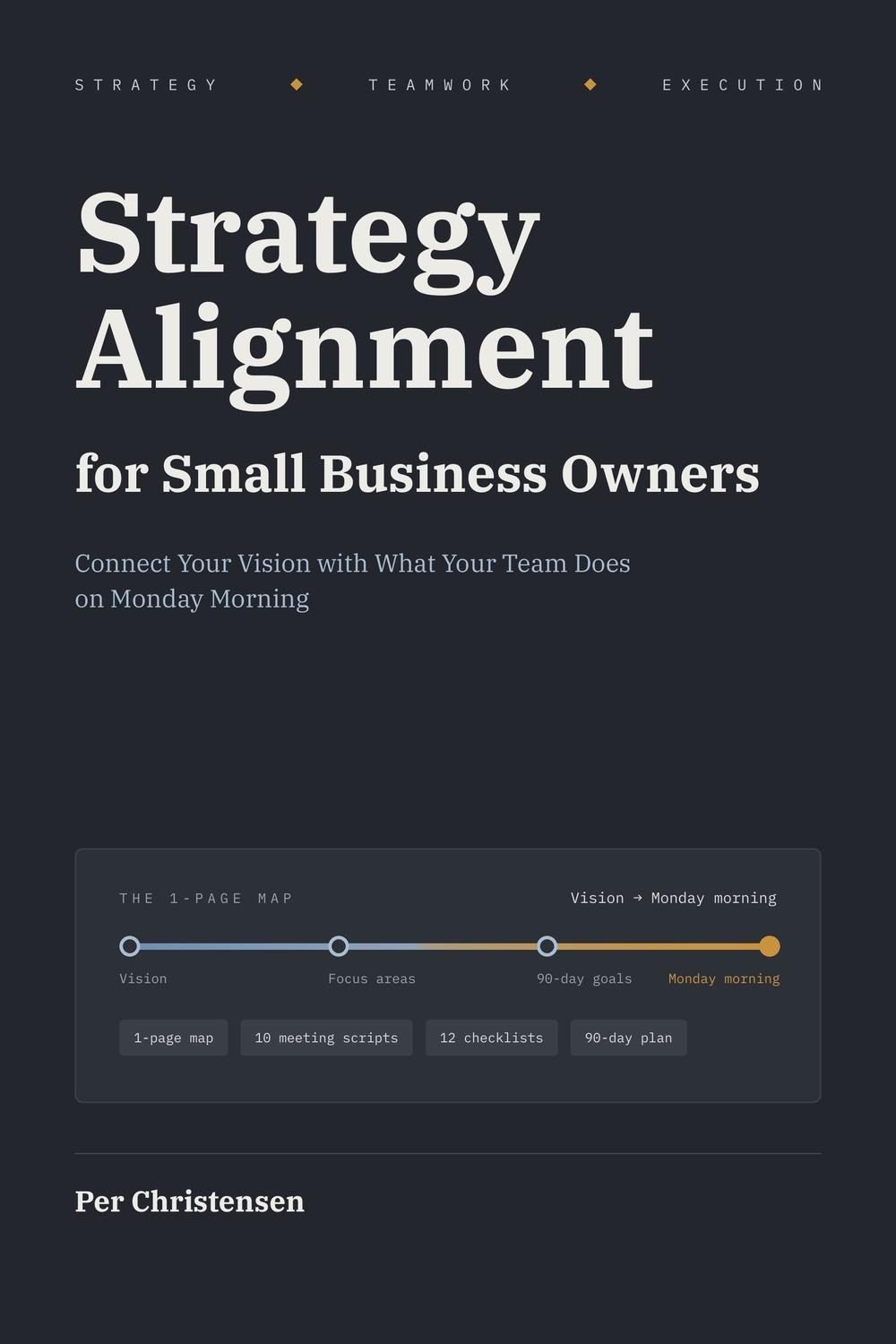
Cover of Strategy Alignment for Small Business Owners

Strategy Alignment for Small Business Owners

Connect Your Vision with What Your Team Does on Monday Morning

Does your team really agree on what matters most?

Most small business owners believe their team shares their priorities. Few have ever checked. The office manager puts invoicing first, the senior engineer quality of work, the bookkeeper cash flow, and each assumes the others see it the same way. The result: decisions everyone agrees on but no one acts on, customer complaints that keep recurring, and a vision that stays in the owner's head rather than guiding the team's day-to-day work.

Strategy Alignment for Small Business Owners shows how to close that gap without corporate jargon, expensive consultants or complex software. Per Christensen adapts Strategy Alignment Analysis™ (SAA) and the practical theory of Organisational Ecology to the realities of a team of 5 to 50 people. Everything fits on a few sheets of paper and can be started next Monday.

Inside you will find:

  • The 1-page strategy alignment map that connects where you want the business to be in five years with what each person does on Monday morning

  • 10 ready-to-use meeting scripts, from the first honest conversation about priorities to the daily ten-minute huddle and the end-of-quarter review

  • 12 diagnostic checklists, printed in the book, to audit the gaps between what you planned and what actually happens

  • Step-by-step guides for turning the owner's vision into frontline daily tasks, so the person on the van, the shop floor or the front desk knows what matters most today

  • A simple decision map that ends the bottleneck of everything waiting for the owner, with clear rules for family members and partners

  • Case studies from five service businesses: a plumbing firm, a restaurant group, a landscaper, a garage and a home-care agency, including what went wrong and what they changed

  • A 90-day plan that puts everything in the right order, plus a template library and quick-reference guides

Who it is for

Owners, managing directors and managers of trade, retail, hospitality and service businesses who are tired of repeating themselves and want a team that pulls in the same direction, without turning a friendly small business into a bureaucracy.

Find out what your team really thinks matters, and get everyone working towards it.

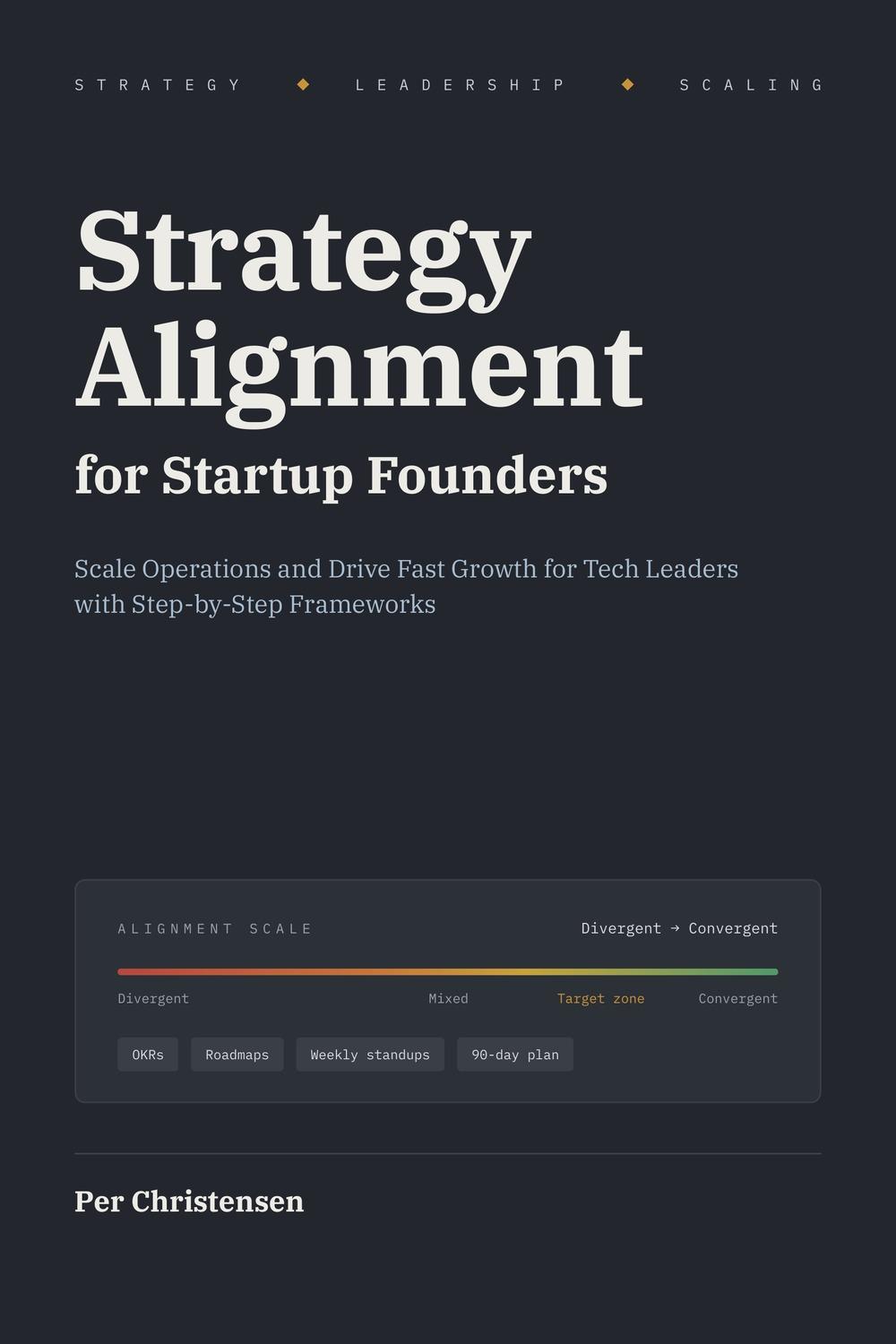
Cover of Strategy Alignment for Startup Founders

Strategy Alignment for Startup Founders

Scale Operations and Drive Fast Growth for Tech Leaders with Step-by-Step Frameworks

Does your leadership team really agree on what matters most?

Most startup leadership teams believe they share priorities. Few have ever checked. Ask each executive to rank the company's strategic priorities and the CTO puts the platform first, the CRO new revenue, the Head of Product the core experience. Each is surprised the others did not rank them the same way.

Nothing is wrong with any of those rankings. Trouble starts when a team does not know they differ. Decisions get reopened, the roadmap bends to whoever shouted loudest, and the strategy lives in the founder's head but not in the company's week. In a startup, that gap is paid for in runway.

Strategy Alignment for Startup Founders shows how to close that gap without enterprise bureaucracy. Per Christensen adapts two strands of proven work to the speed of a fast-growing company:

  • Organisational Ecology is a practical theory of organisational change, developed since 1988. It explains why talented executives who all want the company to succeed so often pull in different directions.

  • Strategy Alignment Analysis™ (SAA) is a structured method for making a team's alignment on its strategic focus areas visible, and turning it into cohesion and execution.

The result is step-by-step frameworks a busy founder can run next week.

You will learn:

  • How to align rapid product roadmaps with long-term business strategy

  • Why fast-growing teams drift apart, and how to spot the symptoms early

  • A 5-step diagnostic survey, printed in the book, that shows in under a week whether your leadership team is really aligned

  • How to write a one-page strategy your team can actually use, and choose the few priorities that matter

  • A quarterly OKR alignment framework designed for startups

  • Eight cross-functional communication templates for product, engineering and sales

  • A step-by-step guide to leading effective weekly executive leadership standups

  • How to set decision rights without bureaucracy, and stay aligned through hiring, pivots, fundraising and hypergrowth

What makes this book different

It does not offer a heavy planning system. It argues that differences in priorities are natural and, up to a point, valuable, and that a team which can see its own alignment clearly is better placed to strengthen it. Because the differences are made visible, the conversation stays factual rather than personal. Every tool is about the team's priorities, never about judging an individual executive.

Three composite startups illustrate every step, and a 90-day plan sequences everything into a single quarter. All templates are gathered in an appendix.

Who it is for

  • Startup founders and CEOs whose company has outgrown running everything from their own head

  • Tech executives leading engineering, product, sales, people or operations in a fast-growing team

  • Board members, investors and advisers who help leadership teams through the transitions of scale


Eleven chapters in four parts move from why alignment breaks, through building it, to making it run and keeping it. Each chapter ends with founder questions, and the book closes with a template library, a glossary and suggestions for further reading.

Frequently asked questions

What order should I read your books in?

Start with Strategy Alignment, the foundation. The two companion books apply the same method to small businesses and to startups, with tools for each. Note that Strategy Alignment, the foundation book, is also available in Norwegian: “Strategy Alignment – Fra samsvar til samstemthet til gjennomføring”.

Can I read each book on its own?

Yes. Each book stands on its own, though Strategy Alignment gives the fullest picture of the method.

When does your next book come out?

My next book is planned for autumn 2027.

Per Christensen

About Per Christensen

Per Christensen is an experienced management consultant who has advised governments and corporations in Europe and the Americas on strategy and organisational change. He has held senior executive positions in a range of organisations and served on a number of company boards.

He is the author of Strategy Alignment, together with its companion books Strategy Alignment for Small Business Owners and Strategy Alignment for Startup Founders. Strategy Alignment is also available in Norwegian. He is also the author or co-author of several earlier publications, including Invisible Patterns, Harmony and Productivity, and The Process of Change, and a contributor to Broad Ecology.

Get in touch

For press, rights or reader questions, drop a line any time.

Email saa@frontpace.net
© 2026 Per Christensen. All rights reserved.